Articles10 posts
Support & SRE articles
Practical perspectives on Support & SRE for founders, technology leaders, and engineering teams.
AllAgile & ProcessAIArchitectureEngineering LeadershipEngineering MetricsFractional CTOSupport & SRE
Latest · June 09, 2026 · Support & SRE
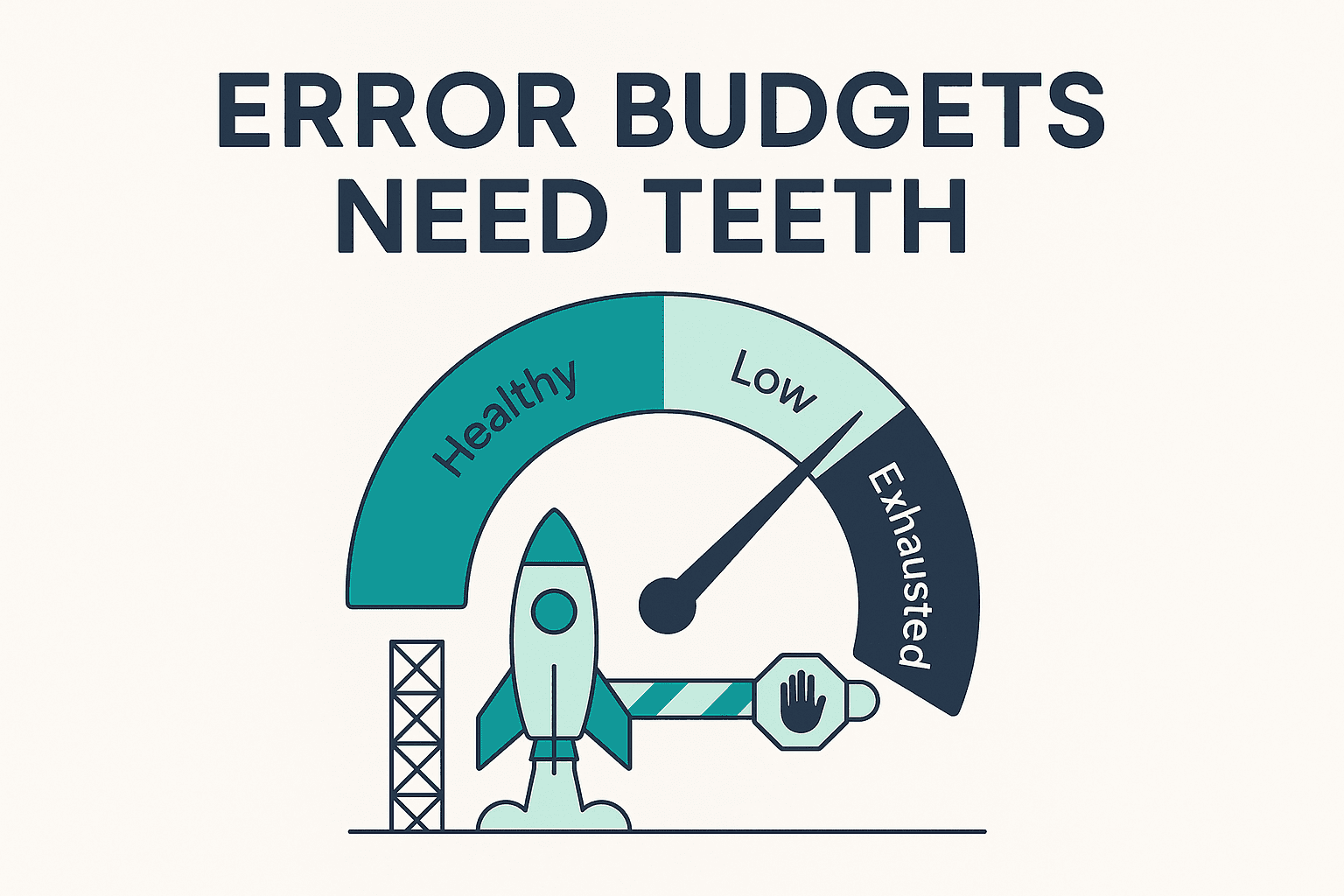
Error Budgets Are a Management Tool, Not an Engineering One
Most error budgets die quietly because engineers introduced them with no authority behind them. The number only matters when it changes what leadership does. Here is how to wire budget burn into roadmap decisions, exec reviews, and feature-freeze conversations so it actually has teeth.
Read article- June 05, 2026Support & SRESRE Org Design: Centralized, Embedded, or Platform?Centralized, embedded, or platform SRE? Each model solves a different problem and breaks in a different way. Here is how to pick one, and how to migrate when you outgrow it.
- June 01, 2026Support & SREL1/L2/L3 at Scale: Where the Tiered Support Model BreaksThe tiered support model works beautifully until it doesn't. At enterprise scale, tickets stop flowing up the tiers and start flowing sideways. Here's exactly where L1/L2/L3 breaks, and the three patterns that replace it.
- May 26, 2026Support & SREYour First SRE Hire Is Not Your Best FirefighterThe instinct is to take the engineer who saves every outage and crown them SRE. That instinct is wrong. The skills that make someone great at firefighting are often the same ones that keep your systems fragile.
- May 14, 2026Support & SREBuilding L1 That Resolves, Not Just EscalatesMost L1 teams become a forwarding service that adds latency and frustrates everyone. Here's what it takes to build a first line that actually resolves tickets — the tooling, the runbooks, and the incentives that produce real outcomes instead of gamed numbers.
- May 08, 2026Support & SREWhen to Split Support From Engineering (Without Losing Context)Somewhere between 20 and 150 engineers, most companies split support out of engineering and quietly break the feedback loop that made them good. Here is how to split without building a wall.
- April 27, 2026Support & SREThe Runbook Habit: How to Make Engineers Document While They FixEngineers fix the same thing three times because the knowledge evaporates after every incident. Here's a runbook habit that survives contact with reality—built into how you resolve incidents, not bolted on as a chore.
- April 21, 2026Support & SREL1/L2/L3 Doesn't Exist at a Startup — But the Work DoesYour 8-person startup doesn't have support tiers. But the work those tiers represent still exists and still needs an owner. Here's how to handle it now and track it so you can split it cleanly when you grow.
- April 10, 2026Support & SREYour First Support Hire Should Be a Generalist, Not a SpecialistMost founders hire a career L1 support agent for their first support role and wonder why it doesn't scale. Here's why a curious generalist who can write docs and talk to engineers beats a ticket-closing specialist — and how to find one.
- April 02, 2026Support & SREYou Don't Need a Support Team Yet. You Need a Shared Inbox and a Rotation.Hiring a support person before you have 20 engineers is usually a mistake. Keep your engineers close to your customers, run a simple rotation, and learn to read the signals that tell you when it's finally time to hire.