What is a Fractional CTO? And When Should You Hire One
Most early-stage founders hit the same wall at some point. The product is working. The team has grown past the "two engineers and a Slack channel" phase. Investors are starting to ask pointed questions about architecture, hiring plans, and technical risk. And the founder realises they don't have a credible answer for any of it.
The instinct is to hire a CTO. The reality is that a full-time CTO at this stage often makes no sense — too expensive, too senior for the workload, and usually a bad fit for a company that doesn't yet know what it needs from the role.
This is the gap a fractional CTO fills. Senior technical leadership, applied surgically, without the equity, salary, or commitment of a full-time hire.
What a Fractional CTO Actually Does
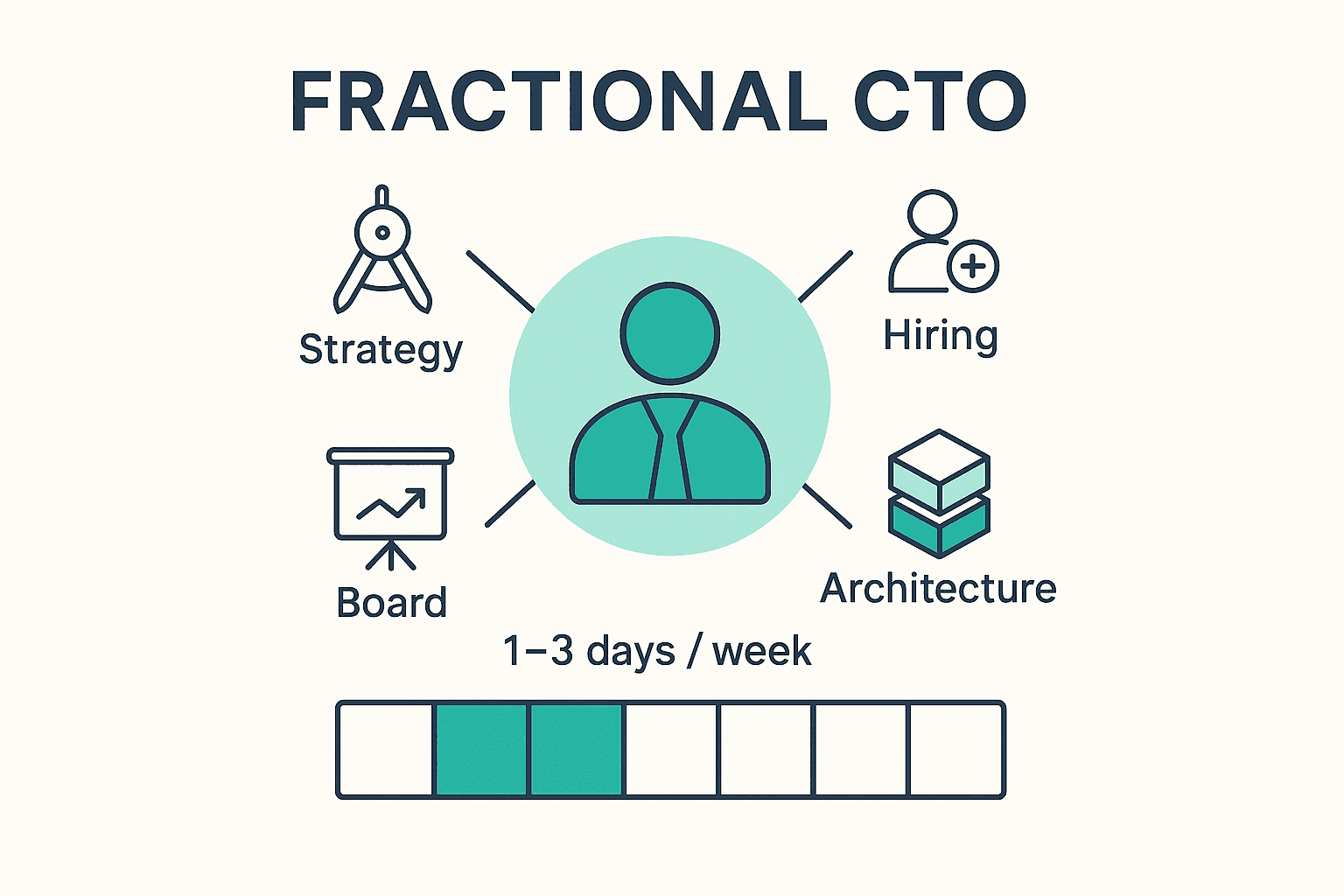
A fractional CTO is an experienced technical executive — usually someone who has been a full-time CTO or VP of Engineering at multiple companies — who works with you on a part-time, contract basis. Typically one to three days a week, sometimes more during critical phases, often less once things stabilise.
The work varies, but in practice it usually covers some combination of:
- Setting technical strategy. Choosing the architecture, the stack, the build-versus-buy calls. Establishing a 12–24 month technical roadmap that lines up with the business plan.
- Engineering leadership. Acting as the senior person engineers escalate to. Resolving disputes, unblocking decisions, mentoring leads.
- Hiring. Defining engineering roles, screening candidates, leading technical interviews, and helping you avoid the expensive mistake of hiring the wrong senior engineer.
- Process and delivery. Putting in place the basics that small teams skip — code review standards, deployment pipelines, on-call rotations, sprint cadences — without drowning the team in process for its own sake.
- Due diligence and investor conversations. Standing in board meetings, answering investor questions, owning the technical story during fundraising and M&A.
- Vendor and architecture decisions. Evaluating tools, negotiating with vendors, making the calls that shape your infrastructure spend for years.
What a fractional CTO usually does not do is write production code as their primary contribution. If you need someone heads-down shipping features, you need a senior engineer, not a fractional CTO. The value is in judgement, not throughput.
How a Fractional Engagement Actually Works
Most engagements I've seen follow a similar shape. There's an initial intensive phase — usually four to eight weeks — where the fractional CTO embeds with the team, audits the technical state, and identifies the two or three things that matter most. Then the engagement settles into a steady cadence: weekly leadership meetings, ad-hoc decision support, monthly architecture reviews, quarterly strategic planning.
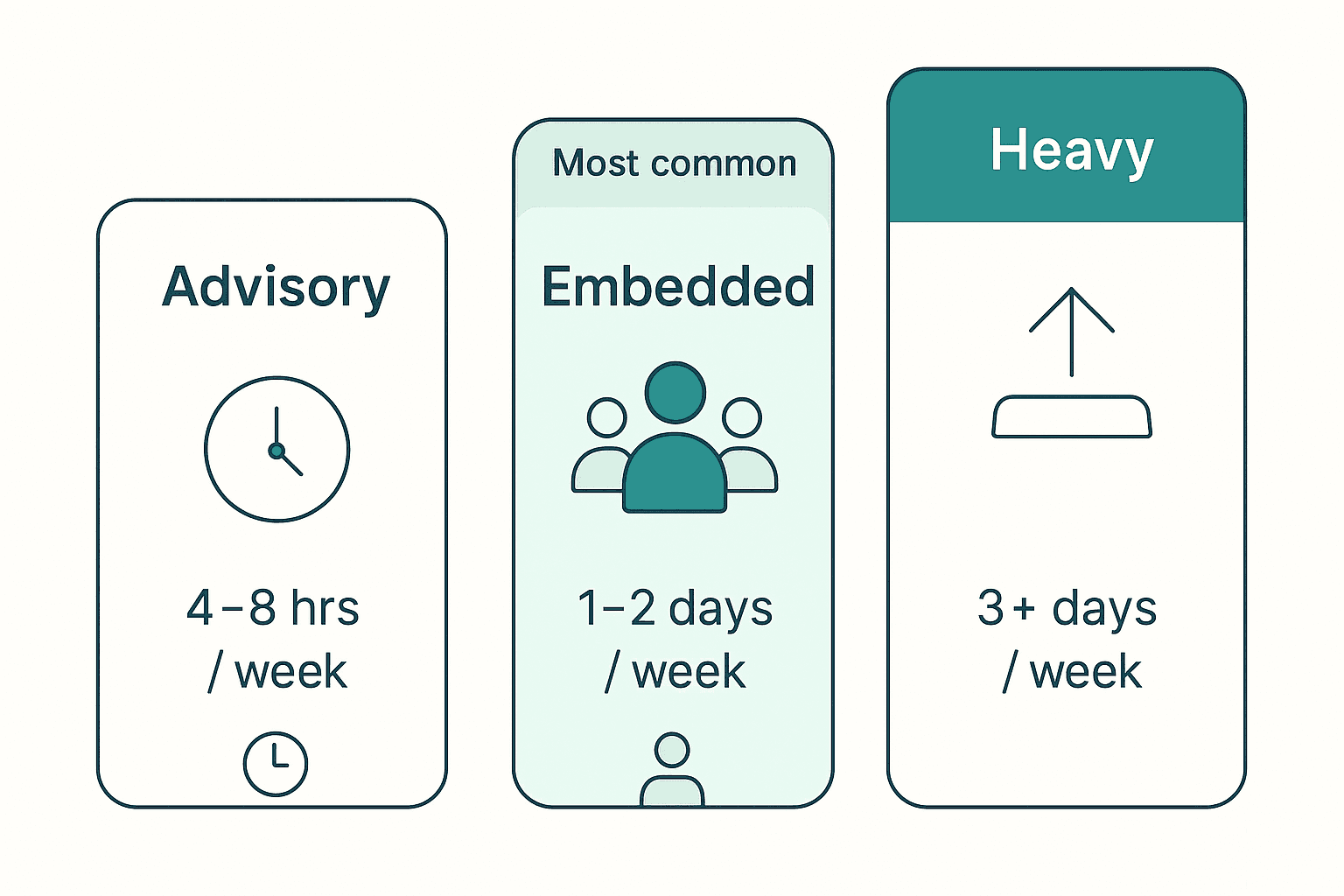
Time commitments vary. Common arrangements:
- Advisory tier — 4–8 hours per week. Strategic guidance, key hires, board prep. Good for companies with a strong technical lead who just needs senior input.
- Embedded tier — 1–2 days per week. The most common shape. The fractional CTO is genuinely part of the leadership team, not an external advisor.
- Heavy tier — 3+ days per week. Usually a transitional arrangement — bridging between CTOs, leading a major migration, or running engineering during a turnaround.
The right level depends on what you actually need, not on what sounds impressive. I've worked with founders who got more value from six hours a week of focused strategic time than they would have from a full-time hire spending most of their week in meetings.
When a Fractional CTO Makes Sense
There are a few patterns where the fractional model is almost always the right answer.
You're Pre-Series A and Need Technical Credibility
Early-stage fundraising puts founders in rooms where they need to defend technical decisions to investors who've seen hundreds of pitches. If your team is strong on product but light on senior technical experience, a fractional CTO closes that gap. The investor sees a credible technical voice on the team without you having to commit $300K+ in salary plus meaningful equity before you've even raised the round.
I covered the timing question in more detail in When Does Your Startup Need a CTO? — the short version is that pre-PMF and early Series A is almost always too early for a full-time CTO, but often the right time for fractional support.
You're Between CTOs
A CTO leaves. The search will take six to nine months. In the meantime, the engineering team has no senior leadership, decisions stall, and morale starts to slip. This is where fractional CTOs earn their keep — stabilising the team, keeping decisions moving, and giving the search the time it needs without panicking into a bad hire.
You Have a Strong Tech Lead, Not a Leader
This is a common situation. The most senior engineer at the company is excellent at writing code and reviewing architecture, but isn't interested in (or ready for) the executive side of the role: board meetings, hiring strategy, cross-functional leadership. A fractional CTO partners with that engineer — handling the executive work, mentoring them into the leadership side, and making the eventual transition smoother.
You Need an Outside Perspective
Sometimes the problem isn't capability. It's politics, history, or founder blind spots. A fractional CTO brings something a permanent hire can't: genuine independence. They can say "this architecture is wrong" or "this hire is a mistake" without their job depending on the answer. That objectivity is worth a lot, especially when the founders themselves are technical and have strong opinions.
You're Doing Technical Due Diligence
Pre-acquisition, pre-investment, or pre-partnership. You need a credible technical voice to evaluate the other side — or to make sure your own house is in order before someone else evaluates it. A fractional CTO with M&A experience can do this in weeks, not months.
When a Fractional CTO Is the Wrong Answer
Fractional engagements solve a specific set of problems. They're not a universal answer.
You need someone writing code all day. If your primary need is shipping features, hire a senior or staff engineer. A fractional CTO at $300–$500/hour writing code is a spectacularly inefficient use of money.
You need someone in the office every day. Some cultures and stages require constant presence. If your team genuinely cannot function without the CTO being there continuously, fractional is not the right shape.
You have a major migration or rewrite happening. These are full-time jobs. A fractional engagement can lead the strategy and architecture, but the day-to-day execution of a multi-month rewrite needs someone whose entire focus is that work.
You've found product-market fit and are scaling fast. Past 30–40 engineers and Series B, the role demands more continuity than a fractional engagement can provide. By this stage, you should be transitioning to a full-time hire, with the fractional CTO helping you find and onboard them.
Fractional CTO vs. Full-Time CTO: The Honest Comparison
| Dimension | Fractional CTO | Full-Time CTO |
|---|---|---|
| Cost | $8K–$30K/month, no equity (usually) | $200K–$400K salary + 1–3% equity |
| Commitment | Month-to-month or 3–6 month contracts | Multi-year, hard to unwind |
| Onboarding time | 2–4 weeks to be productive | 3–6 months to fully ramp |
| Breadth of experience | High — has seen many companies | Deep — knows one company well |
| Continuity | Lower — limited hours, multiple clients | Highest — fully embedded |
| Best for | Pre-Series B, transitions, audits | Series B+, stable scaling phase |
| Risk if wrong fit | Low — short contract | High — months of misaligned execution |
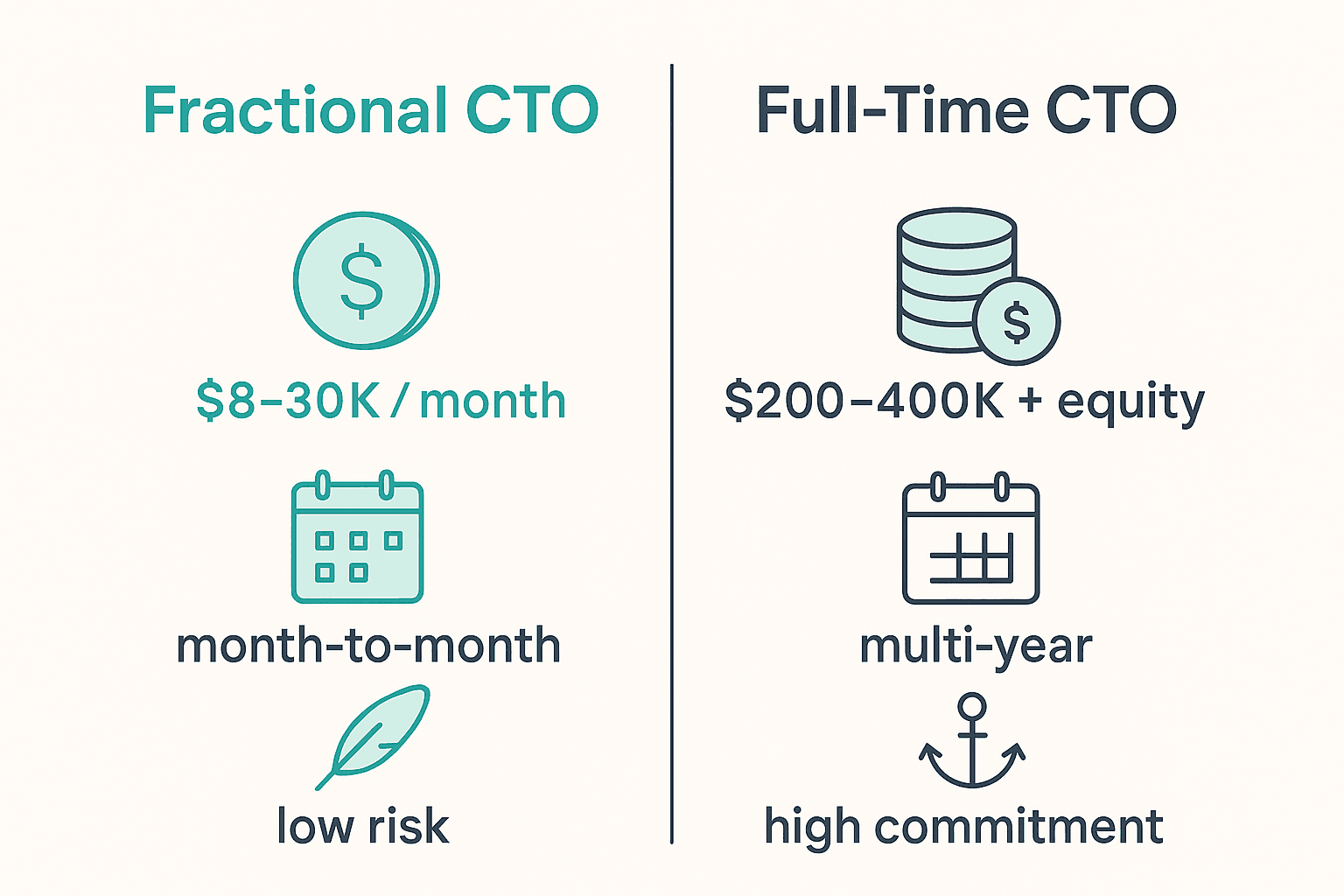
The cost difference is the headline, but it's not the real reason to choose fractional. The real reason is fit. A full-time CTO hired before you know what the role looks like at your company is a high-stakes bet on uncertain information. A fractional engagement is a much smaller bet, and it gives you the information you need to make the bigger one later.
What to Look For in a Fractional CTO
Not every senior technical person is a good fractional CTO. The role demands a specific combination of skills:
Stage experience matching yours. Someone who's only worked at companies past 500 engineers will struggle at a 12-person startup. The reverse is also true. Match the stage they've operated at to the stage you're in.
Comfort with ambiguity. Fractional engagements rarely come with clean job descriptions. You want someone who walks in, figures out what matters, and starts moving — not someone waiting for a Jira ticket.
Willingness to say uncomfortable things. The biggest value a fractional CTO brings is independence. If they're agreeable to the point of telling you what you want to hear, they're not worth hiring. Look for someone who's willing to push back, including on the founder.
A track record of leaving teams better. Ask for references from companies they've left. The right kind of fractional CTO builds capacity in the team so that their role eventually becomes smaller, not larger. If every engagement has grown indefinitely, that's a warning sign.
Clarity on scope and exit. A good fractional CTO will be explicit about what they're not doing, what success looks like, and what the path to either hiring a full-time replacement or winding down the engagement looks like.
What an Engagement Costs
Prices vary, but in 2026 the realistic ranges in North America and Western Europe are roughly:
- Advisory (4–8 hours/week): $4,000–$10,000/month
- Embedded (1–2 days/week): $8,000–$20,000/month
- Heavy (3+ days/week): $20,000–$40,000/month
Some fractional CTOs take small equity grants instead of (or in addition to) cash, particularly at very early stages. This can work, but be cautious — large equity grants to part-time advisors have a way of creating long-term complications. Cash-based engagements with optional small equity tend to age better.
For comparison: a full-time CTO at the same level will run you $200,000–$400,000 in base salary, plus 1–3% equity, plus benefits, plus the very real risk of a $500,000+ mistake if the fit is wrong.
How to Get Started
If you're considering bringing in a fractional CTO, here's a simple way to scope it:
- Write down the three problems you actually want solved. Be concrete. "Improve engineering" doesn't count. "Define an architecture for our next product line" does.
- Be honest about what you're not willing to delegate. If you, as the founder, want to keep technical decision-making, a fractional CTO won't help — and probably shouldn't be hired.
- Start with a defined scope and a 90-day checkpoint. Open-ended fractional engagements drift. A clear initial scope with a built-in review point keeps both sides honest.
- Treat the first month as discovery. Don't expect a fractional CTO to make major changes in week one. The first four weeks should be listening, auditing, and identifying the right two or three priorities. If they're charging ahead before that, they're guessing.
If you want to talk through whether a fractional engagement is the right fit for where you are, I'm happy to have that conversation. The answer isn't always yes — and the honest "no, you need something else" tends to be the most valuable conversation founders have on this topic.
Hit like if you enjoyed this post!
Keep reading
Your First 90 Days as a Fractional CTO: A Practical Playbook
The first 90 days set the tone for the entire engagement. Move too fast and the team resists. Move too slow and you lose credibility. Here is the playbook I follow.
May 25, 2026Fractional CTOFractional CTO vs Full-Time CTO: Cost, Scope & When Each Makes Sense
Most founders pick between a fractional and full-time CTO based on cost. That's the wrong way to choose. Here is a clearer way to think about it.
May 25, 2026