Switching Lanes: 3 Cases Where Kanban Outshines Scrum

I often face the challenge of deciding between Scrum and Kanban for my teams. Let’s talk about how I make that choice. It might help you figure out what’s best for your upcoming project.
Fresh Project
Imagine you’re just getting started: the team is new, some positions are still open, and recruitment is ongoing. Yet, you’re eager to begin building. In such scenarios, you often lack a clear roadmap for even the next two weeks. Your backlog is still taking shape, and the roadmap is a work in progress. New tasks are added to the board daily.
At this point, you’re uncertain about your approach to story points, unaware of the team’s velocity, and undecided on whether to showcase results weekly or bi-weekly.In these situations, I typically lean towards using Kanban initially.
This allows for the flexibility we need early on. Once the team and project dynamics have solidified, transitioning to Scrum becomes feasible, enabling us to fully leverage its benefits.
Support team
Kanban is incredibly effective for support teams, primarily because these teams need to be highly responsive. This means that they must immediately address incidents or issues as they arise, often starting work within 5 to 10 minutes. Essentially, there isn’t a traditional backlog; instead, tasks appear in real-time and are tackled right away. This dynamic makes it challenging to plan sprints or set specific goals for them.
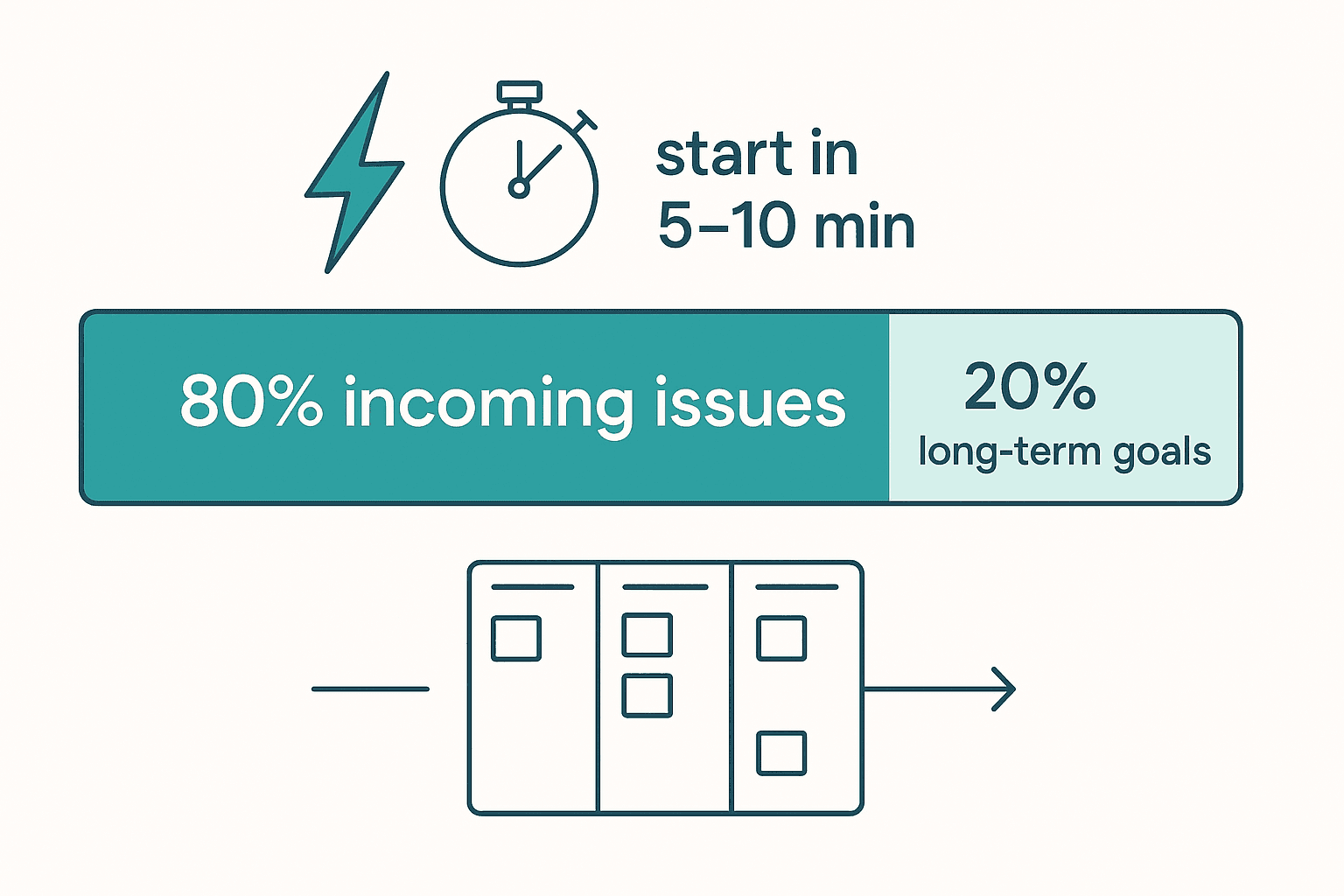
This doesn’t imply that support teams lack long-term objectives; they certainly have them, but such goals constitute about 20% of their workload. The majority of their time is spent addressing immediate issues. Therefore, I prefer to use Kanban for support teams due to its adaptability to their fast-paced and unpredictable environment
Project milestones
When working with Scrum, the focus tends to be on daily development tasks and achieving sprint goals. However, there are times when it’s beneficial to take a step back and assess the broader perspective of the project, particularly the status of major product features.
These features often require more than two weeks to develop, sometimes even months. Kanban can be instrumental in tracking the progress of these larger features, which is crucial at the product management level.
It allows you to monitor which feature or epic is currently underway, which has advanced to the testing phase, or which has already been completed. This overview is particularly useful for reporting to managers or stakeholders, providing a clear picture of the project’s progress on significant elements.
Conclusion
I’ve talked about how I use Kanban in my projects, but here’s the thing — every team and project is its own beast, so there’s no magic formula that works for everyone.
My two cents? Keep it agile. If something’s not clicking with your team, don’t be afraid to mix things up and try something else. The whole point is to make sure you’re working smarter, not harder, and that whatever method you’re using is helping you zip along, not holding you back
Hit like if you enjoyed this post!
Keep reading
The One Sprint Habit That Separates High-Performing Teams From the Rest
Steady delivery in Scrum doesn’t come from working harder—it comes from smarter sprint prep. Discover how proper refinement and planning can stabilize your team’s velocity.
April 24, 2025Agile & ProcessMastering Scrum: A Practical Guide to Starting and Succeeding
Scrum is an agile framework that helps teams manage complex projects efficiently through collaboration, timeboxing, and continuous improvement. This article explains how to get started, key ceremonies, advantages over other frameworks, and actionable tips to enhance team performance.
December 28, 2024